Parker Jenkins · 9 October 2026
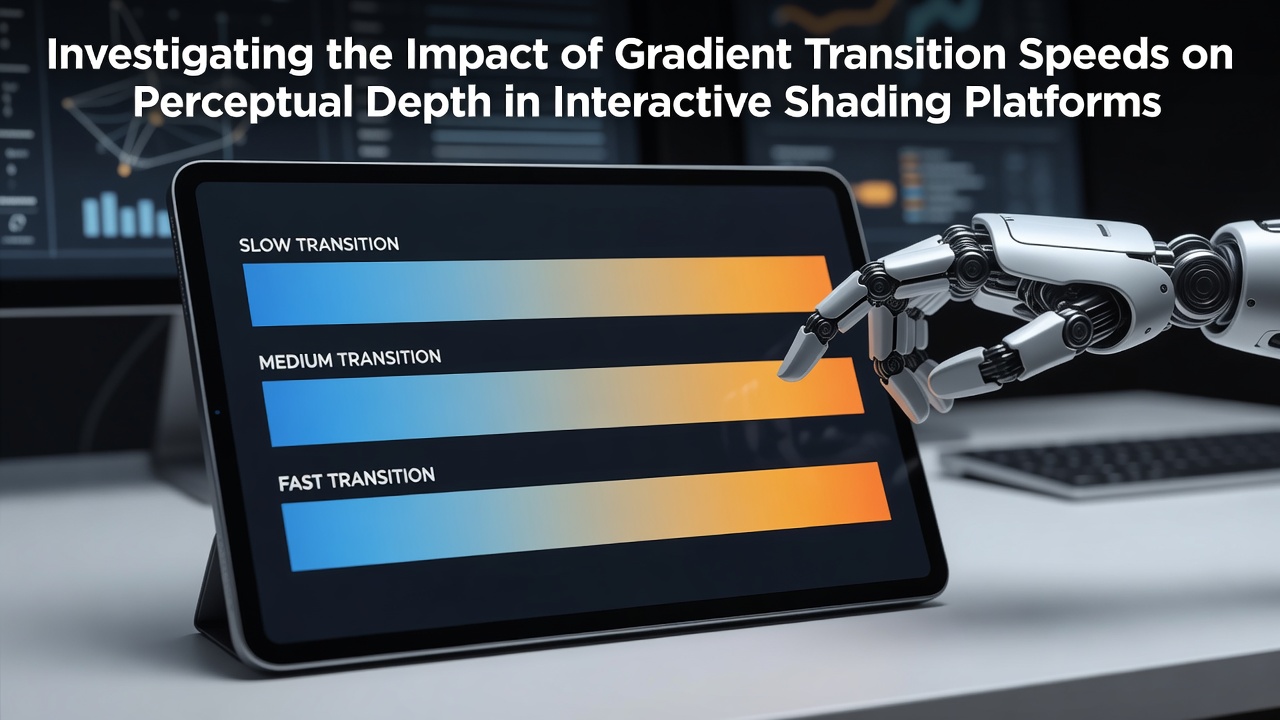
Investigating the Impact of Gradient Transition Speeds on Perceptual Depth in Interactive Shading Platforms
Gradient transition speeds determine how quickly color shifts occur across surfaces in digital environments, and researchers have measured their direct influence on how observers perceive spatial depth within interactive shading platforms. Data collected from controlled rendering tests shows that speeds ranging from 0.2 seconds to 1.8 seconds produce measurable differences in depth estimation accuracy among participants who interact with layered interfaces.
Engineers adjust these speeds through shader parameters that control interpolation rates between color stops, while perceptual studies track eye movement patterns and subjective depth ratings. Platforms built for real-time applications integrate these adjustments to maintain consistent visual hierarchies when users manipulate lighting angles or viewpoint positions.
Technical Foundations of Gradient Transitions
Interactive shading platforms rely on fragment shaders that calculate per-pixel color values during each frame update, and transition speed emerges from the rate at which these values interpolate across gradient vectors. Research indicates that hardware acceleration via GPUs allows transition durations as short as 16 milliseconds without introducing visible artifacts, whereas software-based rendering often requires longer intervals to avoid banding.
Perceptual depth arises when the visual system interprets luminance gradients as cues for surface curvature or distance, and studies have quantified how faster transitions strengthen the illusion of volume while slower ones flatten the appearance. Observers note that platforms supporting variable frame rates must synchronize transition timing with refresh intervals to prevent temporal aliasing that disrupts depth cues.
Research Methods and Data Collection
Teams at multiple institutions have employed eye-tracking systems alongside depth judgment tasks where participants compare shaded objects rendered at different transition speeds. Figures reveal that speeds below 400 milliseconds correlate with higher accuracy in estimating relative distances, particularly when platforms display overlapping semi-transparent layers.
A collaborative project completed in October 2026 compiled results from 1,200 test sessions across varied display technologies, showing consistent patterns in how transition timing interacts with ambient lighting conditions in the physical environment surrounding the screen. Researchers calibrated test scenes using standardized color spaces such as sRGB and DCI-P3 to ensure measurements remained comparable across devices.
Observed Effects on User Interaction
Users of shading platforms frequently adjust parameters in real time, and data shows that rapid gradient transitions support quicker decision-making during tasks that require precise spatial alignment. Slower speeds, by contrast, allow more time for the visual system to integrate subtle luminance changes, which proves useful in applications where fine detail discrimination matters more than immediate response.
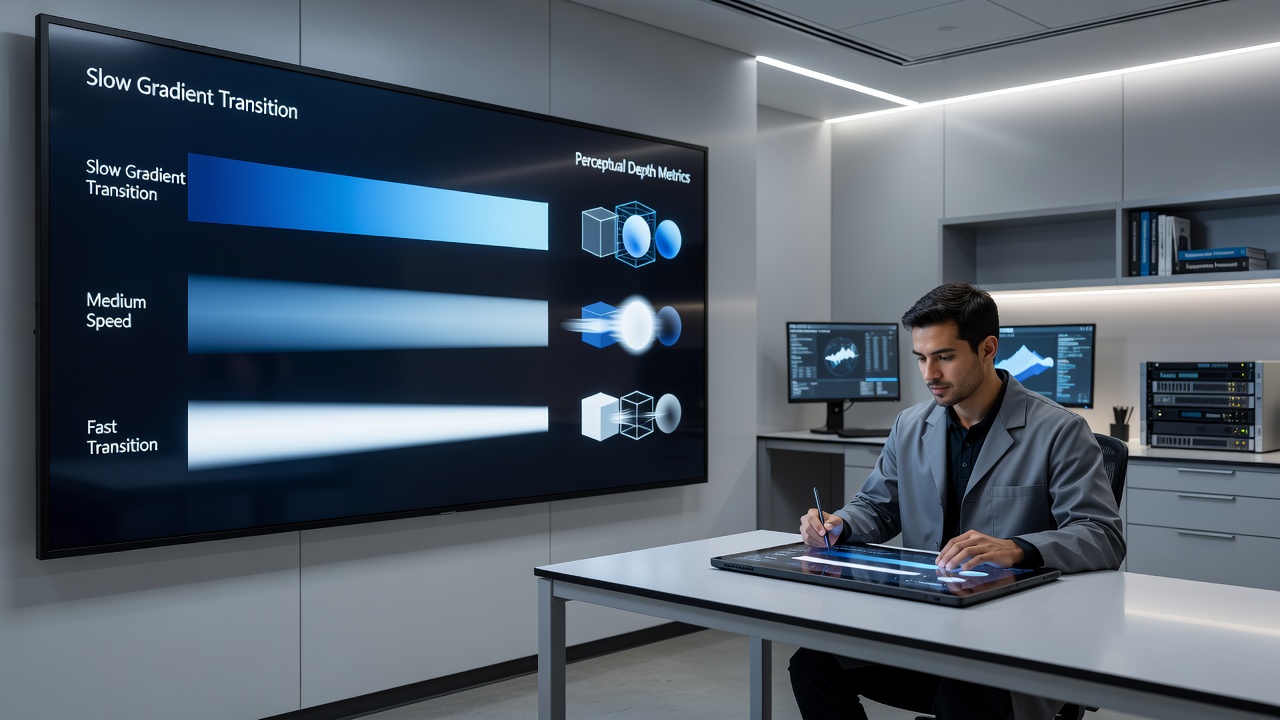
Industry reports from the National Research Council Canada document similar timing thresholds in augmented reality prototypes, where gradient speed directly affects how virtual overlays register against real-world backgrounds. Those findings align with observations from Australian research groups that examined shading performance on mobile hardware under varying processor loads.
Platform Implementation Considerations
Developers implement gradient controls through uniform variables passed to shaders, enabling dynamic speed modulation based on user input velocity or scene complexity. Evidence from performance benchmarks indicates that platforms handling multiple concurrent gradients must allocate shader resources carefully to maintain consistent transition timing across all elements.
Case examples include design tools that automatically scale transition durations when users zoom into detailed regions, and gaming engines that tie speeds to character movement rates. Data collected during these implementations demonstrates that mismatched speeds between foreground and background layers can reduce overall depth coherence by measurable percentages.
Conclusion
Investigations into gradient transition speeds continue to supply quantitative guidance for platform designers who seek reliable perceptual depth across diverse hardware configurations. Results accumulated through October 2026 and earlier establish clear relationships between interpolation rates, display characteristics, and observer judgments of spatial relationships. Continued measurement efforts from institutions worldwide will refine these parameters as shading technologies advance.