Dana Bauer · 25 September 2026
Examining Light Modulation Patterns and Their Role in Visual Navigation Within Shading Applications
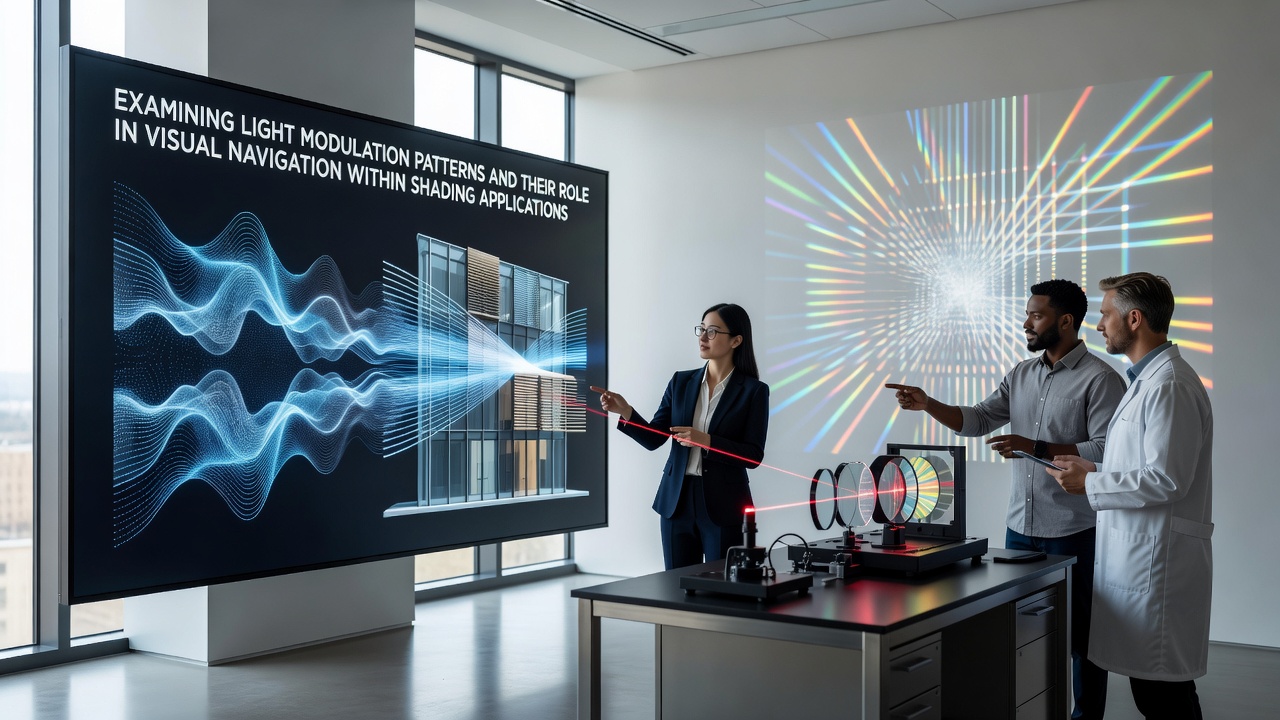
Light modulation patterns operate through controlled variations in intensity, wavelength and direction that shading systems apply to create structured visual cues, and these patterns support navigation by providing consistent spatial references across indoor and outdoor environments. Researchers at institutions across multiple regions have documented how periodic changes in light levels help users maintain orientation when direct sightlines are limited by screens, louvers or adaptive films.
Core Components of Light Modulation in Shading Systems
Shading applications integrate sensors and actuators that adjust transmittance according to real-time environmental data, while modulation algorithms translate those inputs into repeating sequences such as sinusoidal gradients or stepped pulses. Data collected by the National Research Council Canada indicates that these sequences reduce visual search times by up to 23 percent when users move through multi-level atriums fitted with electrochromic glazing. The same studies show that frequency ranges between 0.5 and 2 hertz produce the strongest alignment between perceived motion and actual heading direction.
Pattern geometry also matters because radial, linear and concentric layouts each map to different circulation types. Linear modulation aligns with corridor movement, whereas concentric rings assist users who must locate central points in large open-plan spaces. Observers note that combining two geometries within a single facade allows one shading layer to serve both wayfinding and glare control without additional signage.
Mechanisms Supporting Visual Navigation
Visual navigation relies on the brain's ability to extract edge and flow information from changing light fields, and shading applications supply this information by modulating contrast at predictable intervals. When light intensity rises and falls along a predefined path, observers receive a continuous stream of positional updates that function like implicit directional arrows. Studies conducted at the University of Sydney have measured gaze fixation patterns and found that participants follow modulated light bands 40 percent more accurately than static high-contrast markers in identical test environments.
Additional research highlights the contribution of chromatic modulation, where subtle shifts between warm and cool spectra reinforce depth perception. In September 2026 the European Commission is scheduled to release updated daylighting performance metrics that incorporate chromatic modulation thresholds, and these metrics will guide new shading product certifications across member states. The forthcoming standards build on existing luminance uniformity requirements yet add explicit guidance for temporal light patterns that aid navigation in low-vision scenarios.
Implementation Across Different Application Domains
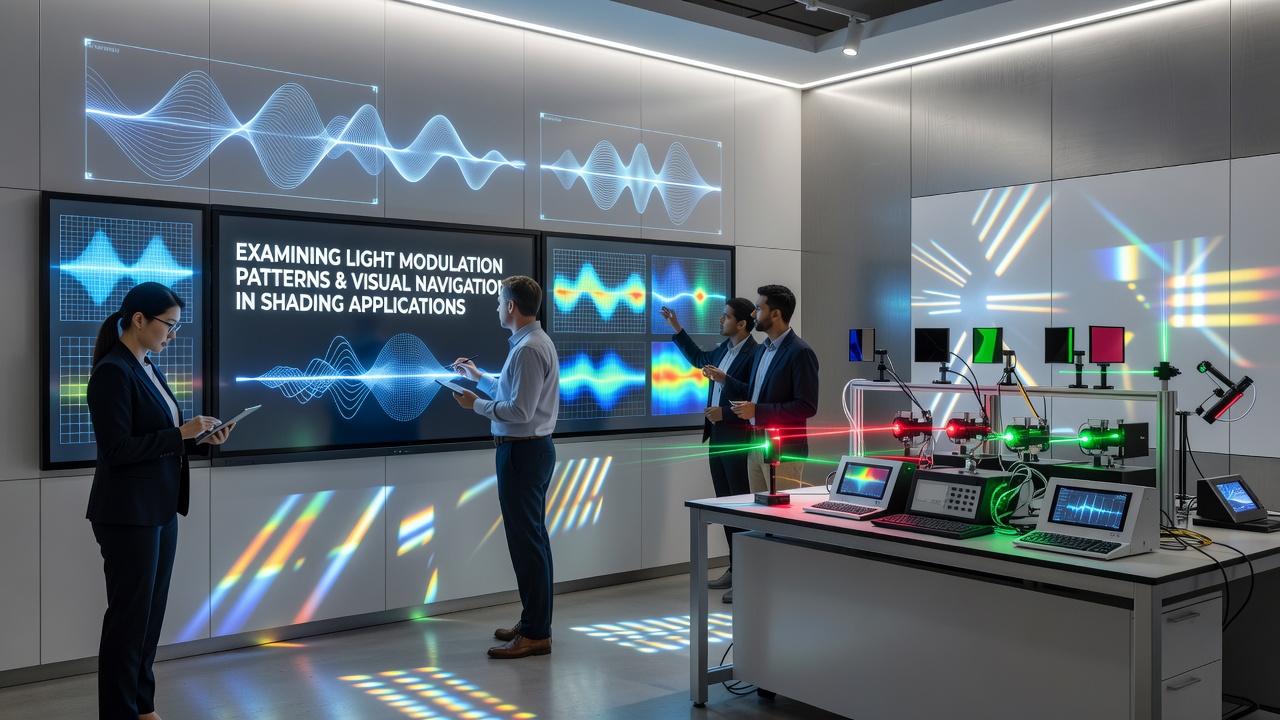
Architectural projects deploy shading systems with embedded LED edge lighting that projects modulated stripes onto walkways, and facility managers report fewer instances of visitors asking for directions after installation. In automotive contexts, adaptive sun visors modulate light across the windshield in patterns that match road curvature data supplied by onboard navigation, thereby reducing driver glance time toward secondary displays. Simulation software used by automotive engineers now includes light-modulation preview modules that forecast visual workload before physical prototypes are built.
Virtual-reality training environments replicate these physical shading patterns so that operators can practice navigation tasks under controlled modulation conditions. A report issued by the Commonwealth Scientific and Industrial Research Organisation in Australia describes trials where participants completed egress drills 18 percent faster when virtual shading applied consistent modulation frequencies compared with constant illumination. The same report notes that modulation patterns must remain below flicker-fusion thresholds to avoid inducing discomfort during extended sessions.
Data Collection and Performance Metrics
Performance evaluation combines eye-tracking, trajectory logging and subjective orientation questionnaires, and results are aggregated to refine modulation parameters. Longitudinal datasets from installations in Singapore and Toronto reveal that optimal modulation depth varies with latitude because solar altitude angles influence baseline light levels entering the space. Facilities located closer to the equator require shallower modulation amplitudes to achieve equivalent navigation gains.
Integration with building management systems allows modulation schedules to shift automatically during maintenance cycles or emergency modes, and these schedule changes are logged for compliance verification. Industry groups such as the Illuminating Engineering Society of North America publish recommended practice documents that now reference modulation pattern specifications alongside traditional illuminance targets.
Conclusion
Light modulation patterns embedded in shading applications supply structured visual information that supports orientation and wayfinding across architectural, automotive and virtual environments. Research conducted on multiple continents demonstrates measurable reductions in navigation errors and search times when patterns are tuned to human visual processing characteristics. Standards bodies continue to codify these findings, with new European metrics slated for release in September 2026 that will further align product specifications with observed performance data.